
He accused the Congress of putting up obstacles to the temple's construction through 'its lawyers' in the Supreme Court.

A plea claimed that Bhaskar had made "derogatory and scandalous" statements against the courts in the country and mentioned the Ayodhya case judgement.
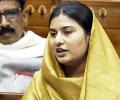
Samajwadi Party leader and Kairana MP Iqra Choudhary has moved the Supreme Court seeking effective implementation of the Places of Worship (Special Provisions) Act, 1991. This move comes amidst several petitions challenging the law's validity, including those filed by the Akhil Bhartiya Sant Samiti and lawyer Ashwini Upadhyay. The Supreme Court, in December 2022, had restrained all courts from examining fresh suits and passing interim orders in pending cases seeking to reclaim religious places. The Act aims to maintain the religious character of places of worship as they existed on August 15, 1947, but the dispute relating to Ram Janmabhoomi-Babri Masjid at Ayodhya was kept out of its purview. The court has listed Choudhary's plea with other pending pleas for February 17.

"Shouldn't they get Indian citizenship? Shouldn't their human rights be protected?" Shah asked the audience which responded with a resounding "yes".
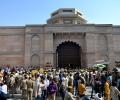
In an unusual coincidence, the two judges of a Supreme Court bench hearing a plea against the survey of the Gyanvapi-Shringar Gauri complex in Varanasi have had an association with a similar kind of dispute relating to the Ram Janmabhoomi-Babri masjid issue as well.
The Supreme Court will hear on April 5 a batch of PILs challenging the validity of certain provisions of a 1991 law that prohibits filing of a lawsuit to reclaim a place of worship or seek a change in its character from what prevailed on August 15, 1947.
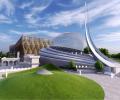
The Allahabad high court on Monday dismissed a petition filed against the allotment of land in Ayodhya's Dhannipur village for the construction of a mosque, following the Supreme Court verdict in the Ram Janmabhoomi-Babri Masjid dispute.
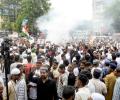
Congress MP Mohammad Jawed and AIMIM president Asaduddin Owaisi have challenged the validity of the Waqf (Amendment) Bill, 2025 in the Supreme Court, arguing that it violates constitutional provisions. The petitions claim the bill imposes arbitrary restrictions on Waqf properties and their management, undermining the religious autonomy of the Muslim community. They also allege that the bill discriminates against Muslims by imposing restrictions not present in the governance of other religious endowments. The bill was passed in the Rajya Sabha and Lok Sabha, with the petitioners arguing that it introduces limitations on the creation of Waqfs based on the duration of one's religious practice, mandates inclusion of non-Muslim members in Waqf administrative bodies, and shifts key administrative functions to government officials, thereby diluting the autonomy of Waqf management.
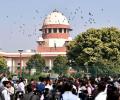
A bench comprising Chief Justice Sanjiv Khanna and Justice Sanjay Kumar also indicated that it may not take up the pending scheduled petitions, heard earlier by a three-judge bench, during the day as it was sitting in a combination of two judges.

"For us Ram temple is a matter of faith and not politics," Thackeray said.

The 1991 provision is an Act to prohibit conversion of any place of worship and to provide for the maintenance of the religious character of any place of worship as it existed on August 15, 1947, and for matters connected therewith or incidental thereto.

Besides, various representatives of the Shri Ram Janmabhoomi Teerth Kshetra, members of the Rashtriya Swayamsevak Sangh, Vishwa Hindu Parishad and their allies are also aiding in hand-delivering the invitations.
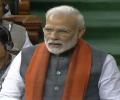
Making a statement in the lower house soon after a meeting of the Union Cabinet, Modi said, "An autonomous trust has been formed, it is called 'Shri Ram Janambhoomi Teertha Kshetra'." The Supreme Court had directed the government to form the trust within three months and the deadline was ending on February 9.

The apex court said an appropriate bench constituted by it will pass an order on January 10 for fixing the date of hearing in the Ram Janmabhoomi-Babri Masjid land dispute title case.
With the Muzaffarnagar riots still fresh in its mind, the Centre has asked the Uttar Pradesh government to maintain status quo in Ayodha, where the Vishwa Hindu Parishad has called for a 'Sankalp Diwas' rally, and prevent any attempt to incite communal tension anywhere in the state.

The bench is likely to constitute a three-judge bench for hearing as many as 14 appeals filed against the Allahabad high court judgement.

After paying obeisance to Ramlalla and overseeing the construction work of the temple, Shinde said he is happy that the dream of "Hindu Hriday Samrat" Balasaheb Thackeray and crores of Ram bhakts is being fulfilled.

The Hindu litigants claim the mosque holds signs suggesting that it was a temple once.
The Supreme Court of India will hear a plea from the mosque management committee challenging an order rejecting its petition in the Krishna Janmabhoomi-Shahi Idgah dispute in Mathura, Uttar Pradesh on January 15. The Allahabad High Court had rejected the mosque committee's plea, stating that the religious character of the Shahi Idgah mosque needed to be determined. The case involves claims that the mosque was built after the demolition of a temple, a claim disputed by the mosque committee. The Supreme Court will now decide on the maintainability of the mosque committee's plea.

He further said that time has come to discuss the issue of Ram Temple and should try to find a permanent solution.
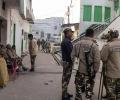
A four-member team from the Archaeological Survey of India (ASI) conducted a survey of the recently-discovered Shri Kartik Mahadev temple, five pilgrimage sites, and 19 wells in Sambhal, Uttar Pradesh, India. The survey followed the discovery of three damaged idols inside a well of the Bhasma Shankar temple, which was reopened after being shut for 46 years. The Shri Kartik Mahadev temple, also known as the Bhasma Shankar temple, was reopened on December 13 after authorities found the covered structure during an anti-encroachment drive. The temple houses an idol of Lord Hanuman and a Shivling and had remained locked since 1978. The district administration has requested carbon dating of the temple, including the well, from the ASI. Meanwhile, the Supreme Court has restrained courts across India from entertaining new lawsuits or passing any orders in pending ones seeking to reclaim religious places, especially mosques and dargahs, until further notice. This action halts proceedings in approximately 18 lawsuits filed by Hindu parties seeking surveys to determine the original religious character of 10 mosques, including the Gyanvapi at Varanasi, the Shahi Idgah Masjid at Mathura, and the Shahi Jama Masjid at Sambhal, where four individuals died in clashes. The Supreme Court will examine the legality, scope, and boundaries of the Places of Worship (Special Provisions) Act, 1991, which prohibits the conversion of places of worship and ensures the preservation of their religious character as it existed on August 15, 1947.

Rizvi along with some Mahantas from Ayodhya will also approach the Supreme Court before December 5 with a solution to the Ram Janmabhoomi-Babri Masjid dispute.

Thousands of Shiv Sainiks are expected to accompany Eknath Shinde on his visit to Ayodhya on Sunday, his first such visit after being sworn in as the Chief Minister of Maharashtra in June last year.
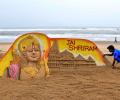
The following is the chronology of events related to the Ram Janmabhoomi-Babri Masjid land dispute in which, after the Supreme Court verdict, Prime Minister Narendra Modi on Wednesday conducted the 'Bhoomi Pujan' or ground breaking ceremony and laid the foundation stone for the temple's construction.
The SC said it had already listed the appeals before the appropriate bench in January.
The bench then said that it was not going to fast track the matter.
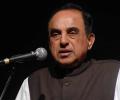
Dismissing the role of Bharatiya Janata Party leader Subramanian Swamy as negotiator for the Ram temple issue, the main parties to the case on Thursday demanded setting up a panel of Supreme Court judges to initiate the talks in the vexed matter.

'The Centre has brought an ordinance on triple talaq. Its duration is of six months. If it is made into a law, then we will challenge this in the Supreme Court.'
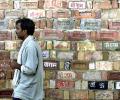
These images of deities on pillars of the structure are not found in mosques and found in temples, the counsel for the deity told SC.

Some speakers also blamed the Bharatiya Janata Party-led government.

The Vishwa Hindu Parishad and the Bajrang Dal have announced that they will mark the day as Shaurya Diwas and Vijay Diwas (day of victory) and have asked the people to light earthen lamps as on Diwali.
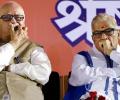
The court also observed that late Vishwa Hindu Parishad leader Ashok Singhal wanted to save the structure because Ram idols were inside.

The judges -- Chief Justice Ranjan Gogoi, CJI-designate Sharad Arvind Bobde and justices Dhananjaya Y Chandrachud, Ashok Bhushan and S Abdul Nazeer -- delivered the verdict in the century-old dispute.

The Allahabad high court will hear Wednesday a plea against the acquittal of all 32 accused, including Bharatiya Janata Party veterans L K Advani and Murli Manohar Joshi, in the Babri mosque demolition case.
The NBSA, a self regulating body for news channels, also advised channels that no footage of the demolition of the Babri Masjid is to be shown in any news item relating to the Ayodhya matter.
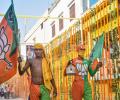
The BJP has won just eight out of the 40 zila panchayat seats in Ayodhya, a disappointment for the ruling party in the district on which the Centre and the state government have lavished much attention.

A bench of Chief Justice Ranjan Gogoi and justices Sanjay Kishan Kaul and K M Joseph would hear the appeals filed in the matter.

The hearing of the civil suit filed in a Mathura court seeking ownership of the entire 13.37 acres of Krishna Janmabhoomi land has been adjourned till December 10, after the plaintiff in the case, Shri Krishna Janmabhoomi Trust, failed to appear before the court on Wednesday.

Here are some of the reactions to the apex court's decision.
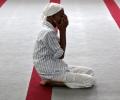
The issue had cropped up when a three-judge bench headed by Chief Justice Dipak Misra was hearing the batch of appeals filed against the Allahabad high court's 2010 verdict by which the disputed land on the Ram Janmabhoomi-Babri Masjid area was divided in three parts.
 © 2026 Rediff.com - Advertise with us - Disclaimer - Privacy Policy - Sitemap - Feedback - About us - Terms of use - Grievances